
Written By Sammie Gallo, Creator of Abundant Life: You Were Made for More
There are so many different definitions of love out there – on top of that, the culture around us has warped us into thinking that love always has to be synonymous with agreement. We must agree, or rather, condone, a person’s decisions in order to love them. Is that true?
When we look at the Bible, that simply isn’t true – but it can be a difficult topic to walk through. Sometimes, loving somebody looks like stepping in and calling them out with a posture of concern, care, and grace, so that they can be free from sin, hurt, or an addiction that has a hold on them. Sometimes, love looks like choosing to practically care for somebody who disagrees with you about big issues, who may be living a lifestyle that you don’t quite agree with, because you want what is best for them and you trust God to do the rest.
Romans 13:8: “Let no debt remain outstanding, except the continuing debt to love one another” (NIV)
My five year old, upset one day after getting in trouble, looked at me and said: “you love the babies more than me!” For reference, she is my oldest (5.5), and I have three children younger than 3-years-old. My time is split more than most, in the best way possible. I knew she didn’t really mean it – but she obviously felt disconnected enough to say it in the moment.
How to Help Your Child Feel Loved
Most parents love their children. However, many children don’t feel loved at every moment throughout the day. One possible reason is that maybe they misunderstand love, or maybe parents aren’t “speaking” their child’s primary love language. Love can be expressed and received in five distinct ways or “languages,” which include words of affirmation, quality time, acts of service, gifts or physical touch. If parents don’t speak the right language, a child likely won’t feel the richness of that love.
AND the trickiest part?! These love languages often change as children age, so it’s super important we stay on top of the cues that tell us what our children need and more importantly, why.
The First Six Years
The first six years are extremely important in meeting a child’s emotional need of feeling loved. That’s psych 101 – from the moment they are born, their physical needs and their emotional needs are deeply correlated. In these early stages, research shows that parents should speak all five love languages.
Physical touch is the most natural language for parents. It is almost instinctive to hold and cuddle your babies. All research indicates that children who receive tender touch at this stage of life will be much healthier emotionally than children who receive little touch.
Acts of service is a love language that you must speak in order for your child to survive. When your child is an infant, you feed, clean and change her. As she grows, you serve her by exposing her to things she can see, touch, taste, smell and hear. You do things for her that she cannot do for herself.
Quality time becomes important as a child ages. This is when reading stories, as he sits on your lap, becomes meaningful. Playing age-appropriate games communicates that you love him. Children begin to crave undivided attention from their caregivers for this reason.
Gift giving is a concept that most kids begin to understand by age 4. When you wrap a present, it is even more exciting for your little one. This provides an opportunity to teach your child to express gratitude after receiving a gift.
Words of affirmation can encourage and inspire a young child. Praising her efforts at learning to walk gives her motivation to get up and try again. As your child begins her very first attempts at reading, your encouragement gives her the confidence to keep learning.
By the time early childhood is over, you should be able to tell what your child’s preferred love language is. Do they ask for a hug? Do they ask for you to come see a piece of art they made or to play a game with them? Do they ask you to take them on a date? All of these things are clues into what their primary love language is.
The goal is to give your child heavy doses of his or her primary love language while continuing to include the other four. This teaches the child how to receive and give love in all five languages.
The School-age and Preteen Years
How parents bond with their children in the preadolescent years will greatly impact their emotional health and behavior during their teen years. When parents learn to speak a child’s primary love language throughout grade school and middle school, they prepare their child for a smoother transition into adolescence.
When children feel deeply loved by parents, they are much more open to parental guidance. As parents discover the simple principle of speaking a child’s love language, parents have given testimonies of dramatic changes in their child’s attitude and behavior.
Studying Your Child
Here are three ways to better discover a child’s primary love language during the school-age and preteen years:
Notice how your child relates to you.
- Typically, kids show love in the way they’d like to receive it. Does your child give you affirming words, for instance, or a number of gifts? How he treats you is evidence of his primary love language.
Listen to what your child complains about the most.
- Her complaints can reveal her love language. “We don’t ever spend any time together” reveals the love language of quality time. “I can’t ever please you” indicates that she wants words of affirmation. If your child complains that she doesn’t have something, her language might be gift giving, but consider how your child wants to use the item. Its use might reveal her love language. For example, if she complains that she wants a new outfit because she wants to shop with you, the language might be quality time and not gift giving; but if she wants it because she wants to look good in front of others, her language may be words of affirmation.
Categorize the types of things your child requests the most.
- “Can we take a walk?” is a request for quality time. “How does this look?” or “how am I doing?” reveals his desire for words of affirmation.
If you think you know your child’s love language, you can test your theory. Focus on one of the love languages each week for five weeks. On the week that you are speaking your child’s primary love language, you will see a difference in his attitude and behavior.
Once you are confident in knowing your child’s primary love language, speak it daily and watch his “love tank” begin to fill up.
The Teen Years
A mother told me, “I know my daughter’s love language is quality time. As a child, she loved to play games with me, and we’d go shopping together. Now that she’s a teen, she has no interest in doing those things with me. Did her love language change?”
Parents often ask that question about their teens. The answer is no. But how you communicate your children’s love language might need to be tweaked. You may need to learn new “dialects” of your teen’s love language.
Teens go through tremendous physical, emotional and intellectual changes. Even if you spoke her love language when she was younger, she may draw back from it when she becomes a teen, believing the ways you formerly expressed love seem childish now. Her primary language is likely the same as it has always been, but she may not “hear” or “speak” that language in the same ways that she used to. The dialect has changed, and in many ways, teenage brains are maturing and becoming rewired by the things we give most influence in our lives.
The Lord has given you the unique gift of being a parent. Become a student of your child and learn to love them well by seeking out their love language. Most importantly, make sure you are digging into the Word. Let God be the most influential source in your home, in your lives, and trust Him to do the rest.
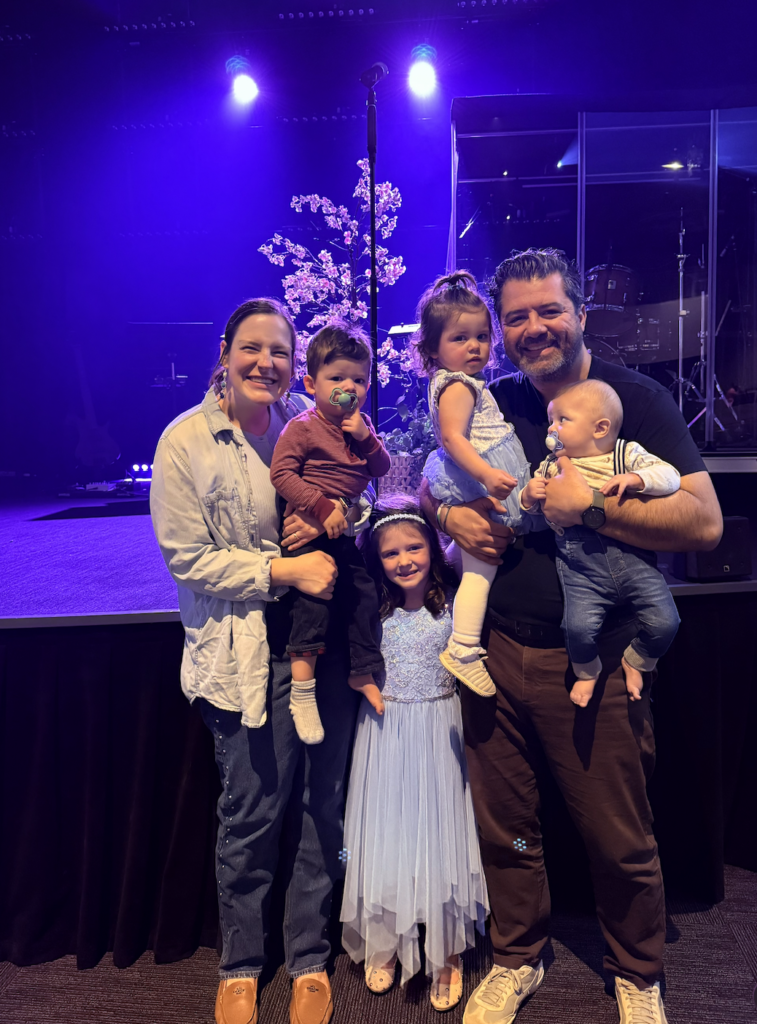
Sammie graduated from Robert Morris University in 2017 with a background in biology and psychology and started working with Anglicans for Life (AFL) in 2017. In addition to her work with AFL, she spent 3 years going into public schools with the Women’s Choice Network, speaking to high schoolers about healthy relationships and sex education. She has a passion for making sure every teenager, parent, and youth leader is equipped, engaged, and encouraged to have Gospel-centered conversations regarding relationships, sexuality, and life issues.
Sammie married her best friend, Juan Gallo, in May 2019. During her free time, she and her husband invest in teenagers and young adults in their community, and disciple their kids – Ofelia, Leo, Catalina, and Milo. Sammie is also a Registered Nurse (RN).