
Written by Sammie Gallo, Creator of Abundant Life: You Were Made for More
Have you ever read the book, Like Me: A Story About Disability and Discovering God’s Image in Every Person, by Laura Wifler? A couple of quotes that set that capture the tone of the book well:
“I don’t always understand what the kids [at therapy] are saying or why they act the way they do. Mom says it’s because God made everyone unique. We all give him glory in different ways, and if we look closely, we can learn a little bit about God through each of them. ‘It’s a privilege to know another human being, no matter what they look like or how they act. Don’t ever forget that, kiddo,’ Mom says.”
“God made you, God loves you, God is kind to you.”
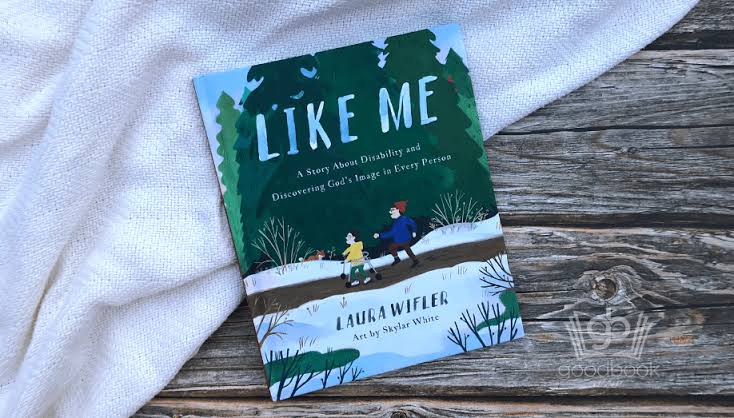
My daughter’s school does a “Star of the Week” throughout the school year, where every child gets their own special week to teach the class all about them, their family, and what they’re all about. It’s so special for the kids, and at the end of the week, they get to have visitors come in and read to the class while they share a special sweet treat and teach the visitors everything their class learned about them. When it was Ofie’s turn to be star of the week, she chose to bring in Laura Wifler’s book, and to invite her 2.5 year old brother, Leo, who has a rare genetic condition that causes him to struggle with epilepsy, hypotonia (muscle weakness), profound developmental delays, and dysphagia (difficulty swallowing) to meet her class. Because of his genetic condition, Leo has and will have disabilities for the rest of his life; Ofie has come to know him, love him, and accept him- and she wanted to encourage others to do the same. At the time, Leo was 2.5 but had just started crawling independently (and with a lot of motivation!) small distances. He can sit on his own, but needs safety support from somebody who knows his needs.
“It is estimated that 16% of the world’s population lives with a disability – and is one of the largest, under-reached people groups in the world for the Gospel,” according to the Tim Tebow Foundation.
As I’ve come to understand disability through a Gospel lens, I’ve really learned first and foremost how important good theology is. It’s through that lens that we will either come to believe that God is good and true no matter what our circumstances look like, or we will come to believe he does not have our best interests at heart because our struggles are too difficult, or because our lives are too different than we think they should look like.
Some brief, practical tidbits that have helped me as I’ve processed my child’s disability:
- Taking intentional time to grieve your losses – for me, this has looked like grieving milestones, grieving a normal life, where everyday isn’t centered around therapy and appointments.
- Telling your story to empathetic listeners – I’m still learning how to do this well – how to advocate and honor who God has made Leo and how I am a part of his story, learning as I go.
- Celebrating the process, not the outcome – we celebrate every milestone that Leo reaches – even if it isn’t the kind you see on paper or are asked at doctors visits! He has slowly started reaching his right hand to grasp certain things, and sometimes even both hands together. You’d never see that on a “check this box” sheet at the doctors. But we celebrate it anyway. Because for him, it is a functional step toward independence. It’s a win. So we celebrate it.
- Recognizing your assignment in this life. My assignment in this life is not to be as comfortable as I can. I was never promised a normal life. My assignment is to love God, love people (all of them – no matter their age or capabilities), and to ask the Holy Spirit to use me as a tool to do that.
- Cultivating habitual gratitude for what remains. Hope. Pray. Ask God to give you glimpses of healing.
- Deciding to love my life, even though it looks very, very different than I thought it was going to.
As I have made connections with other parents, I have come to see that so many of us wrestle with the same questions.
- Why does God allow so much brokenness in the world?
- Why did God allow this to happen to my child (or me)?
When it comes to suffering, I’m convinced God has more in mind for us than to simply avoid it, give it ibuprofen, divorce it, institutionalize it, or miraculously heal it. But how do we embrace that which God gives or allows to happen to us on this earth? I have found a person’s contentment with impairment is directly proportional to the understanding of God and his Word. If a person with a disability is disappointed with God, it can usually be traced to a thin view of the God of the Bible.
Now you understand why I believe a “theology of brokenness” is desperately needed today—a theology that exalts the preeminence of God while underscoring his mercy and compassion to the frail and brokenhearted.
These ideas behind disability ministry are at their core, pro-life. My own experiences in this world continue to only validate and verify how pro-life I really am. That every life matters. Every life has value, no matter what it can give or produce. Disability ministry is pro-life because it affirms that every human life has inherent dignity and worth based on being created in the image of God, regardless of physical, mental, or functional capacity. A robust pro-life stance defends individuals with disabilities at life’s fragile beginning—such as facing prenatal diagnoses—and at the end of life when care might be rationed or undervalued.
Here’s a picture of God’s Kingdom, as described in Revelation 7:9, here on Earth.
“After this I looked, and there before me was a great multitude that no one could count, from every nation, tribe, people, and language, standing before the throne and before the Lamb. They were wearing white robes and were holding palm branches in their hands.”
What does this tell us? There are no barriers in heaven, so we believe there should not be barriers here on earth. Every person should be able to know, experience, and follow Jesus.
Dig Deeper Questions – Go through these at the dinner table, with your small group, with the elders of your church body, or to really start and develop a theology of suffering and disability.
- Do you know someone with a disability?
- How is their life different from yours?
- How is their life the same?
- Are they still created in the image of God?
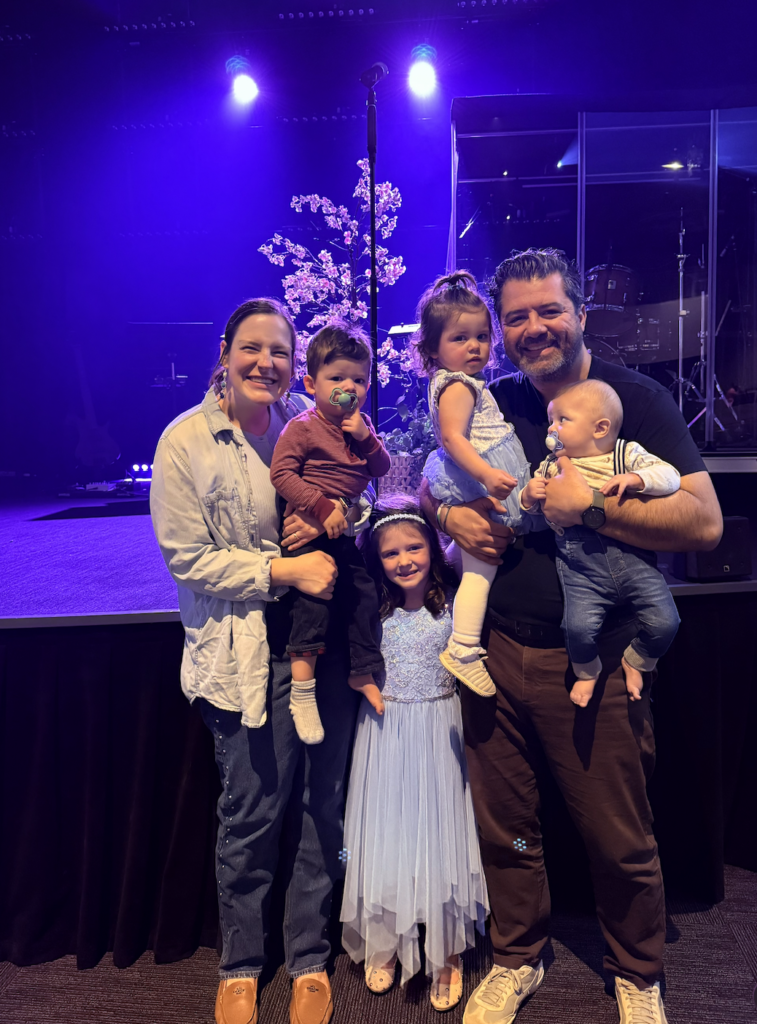
Sammie graduated from Robert Morris University in 2017 with a background in biology and psychology and started working with Anglicans for Life (AFL) in 2017. In addition to her work with AFL, she spent 3 years going into public schools with the Women’s Choice Network, speaking to high schoolers about healthy relationships and sex education. She has a passion for making sure every teenager, parent, and youth leader is equipped, engaged, and encouraged to have Gospel-centered conversations regarding relationships, sexuality, and life issues.
Sammie married her best friend, Juan Gallo, in May 2019. During her free time, she and her husband invest in teenagers and young adults in their community, and disciple their kids – Ofelia, Leo, Catalina, and Milo. Sammie is also a Registered Nurse (RN).